

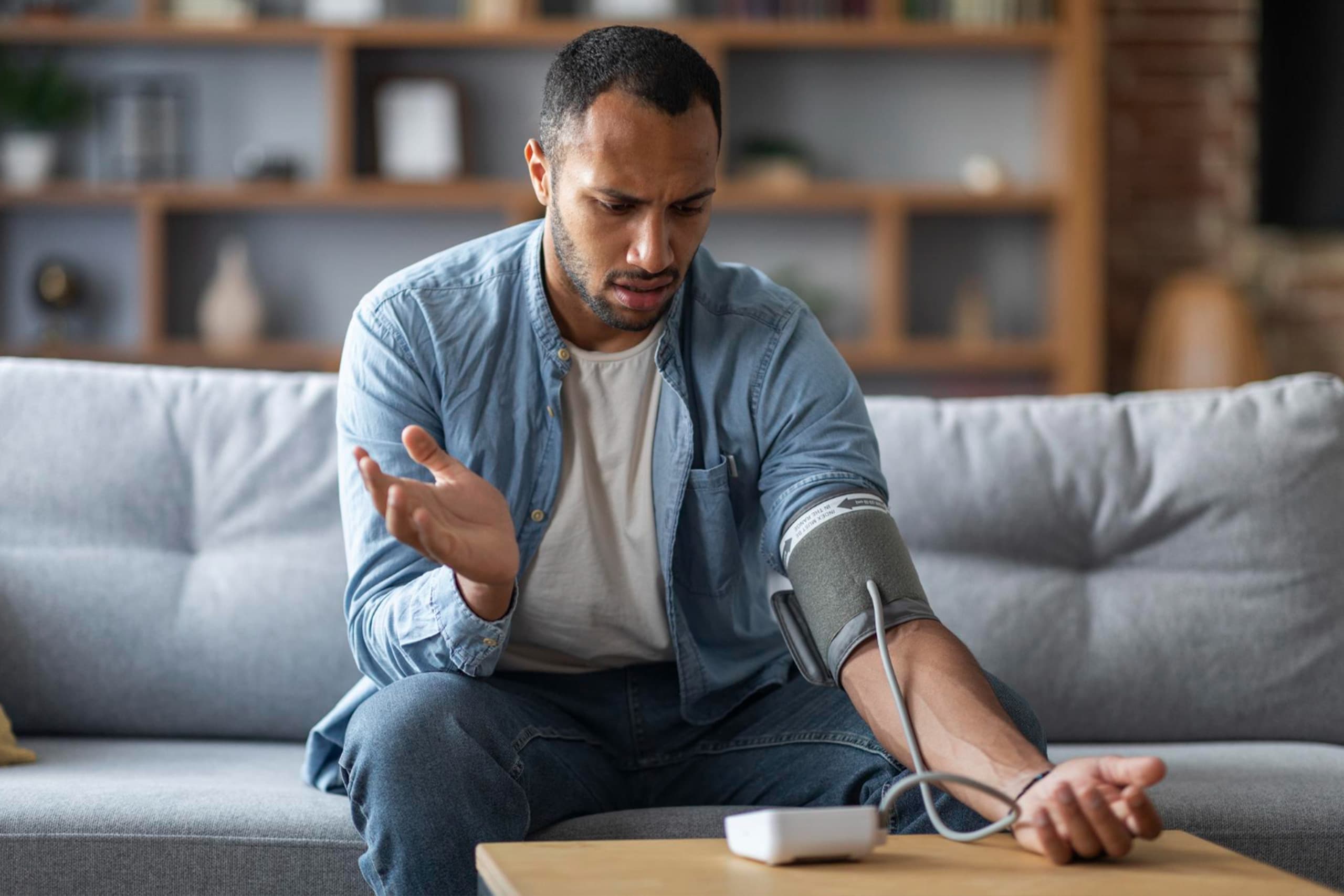
How to Take Blood Pressure at Home: 5 Common Mistakes
January 4, 2026
Getting scary high readings at home? It might not be your heart, it might be your technique. Learn the most common blood pressure monitoring mistakes and how to get an accurate reading every time.
How to measure your blood pressure correctly at home
You sit at the kitchen table, wrap the cuff around your arm, and press start. The machine squeezes, beeps, and shows a number that is higher than you expected. Before you worry, check how you took it.
Home monitoring is one of the best tools for managing high blood pressure. The 2025 blood pressure guideline from the American Heart Association and American College of Cardiology encourages it for people with high blood pressure, and it helps your clinician see whether treatment is working. But home monitors are sensitive. A few small habits can push a reading up by 10 points or more.
Below 130/80
The goal for most adults under the 2025 guideline. Your own target may differ, so confirm it with your clinician.
How much common mistakes can add
These estimates come from American Heart Association and American Medical Association guidance on accurate measurement. Each one raises the top number on its own, and they can stack.
| Mistake | Can add about |
|---|---|
| Cuff over clothing | 5 to 50 mmHg |
| Talking during the reading | 10 to 15 mmHg |
| Full bladder | 10 to 15 mmHg |
| Arm hanging, not supported | 10 mmHg |
| Back or feet not supported | 5 to 10 mmHg |
| Cuff too small | 2 to 10 mmHg |
| Crossed legs | 2 to 8 mmHg |
Before you measure
30 minutes before
Skip caffeine, smoking or vaping, and exercise. Even rushing up the stairs can raise your number for a while.
5 minutes before
Empty your bladder, then sit quietly in a calm spot. No phone, no TV, no conversation.
Sit in the right position
- Sit in a firm chair, not a sofa, with your back resting against it.
- Keep both feet flat on the floor and your legs uncrossed.
- Rest your arm on a table, palm up, with the cuff at heart level.
- Stay still and silent until the reading finishes.
Get the cuff right
The cuff is where most errors start. A cuff that is too small reads falsely high, and one that is too large can read falsely low. Most cuffs print a size range on the inside, so measure around the middle of your upper arm and compare.
Bare skin
Never measure over a sleeve, and don't roll a tight sleeve up above the cuff.
Snug fit
You should be able to slip two fingertips under the top edge.
Right spot
Place the bottom edge about an inch above the bend of your elbow.
Which type of monitor to trust
| Monitor | Verdict |
|---|---|
| Upper arm cuff | Best choice for most people, if it is clinically validated |
| Wrist cuff | Very sensitive to position; use only if an arm cuff won't fit |
| Cuffless watch or ring | Not recommended for measuring blood pressure under the 2025 guideline |
You can check whether a model has passed accuracy testing at validatebp.org. If you have an irregular heartbeat such as atrial fibrillation, ask your clinician which method works for you, because some home devices struggle to read it accurately.
How many readings, and when
1
Take a reading and write it down.
2
Wait one minute and take a second reading.
3
Log both, or their average, with the date and time.
Measure in the morning before medicines and food, and again in the evening, at about the same times each day. Before a doctor visit or after a treatment change, a week of readings gives the clearest picture. The first number is often the highest because you are still settling, so don't judge your day by it.
What your numbers mean
| Normal | Less than 120 and less than 80 |
| Elevated | 120 to 129 and less than 80 |
| Stage 1 | 130 to 139 or 80 to 89 |
| Stage 2 | 140 or higher, or 90 or higher |
| Severe | Higher than 180 and/or higher than 120 |
One high reading is rarely an emergency. Stress, pain, poor sleep, and salty meals all cause short spikes. What matters is the trend over several days. And if your readings look good, keep taking your medicine; never stop or change a dose without talking to your prescriber.
When to get help right away
If a reading is above 180/120, wait five minutes and measure again. If it is still that high, call your clinician.
Call 911 if a high reading comes with chest pain, shortness of breath, back pain, numbness or weakness, vision changes, or trouble speaking. Don't wait to see if it comes down.
Bring to the pharmacy counter
- Your home monitor and its cuff.
- Your log of recent readings.
- A list of your medicines, including any you fill at other pharmacies.
Is your monitor telling the truth?
Monitors can drift over time, and cuff size is a frequent problem. Ask your pharmacist to check your cuff fit and walk through your technique, so the numbers you share with your doctor are ones you can trust.