

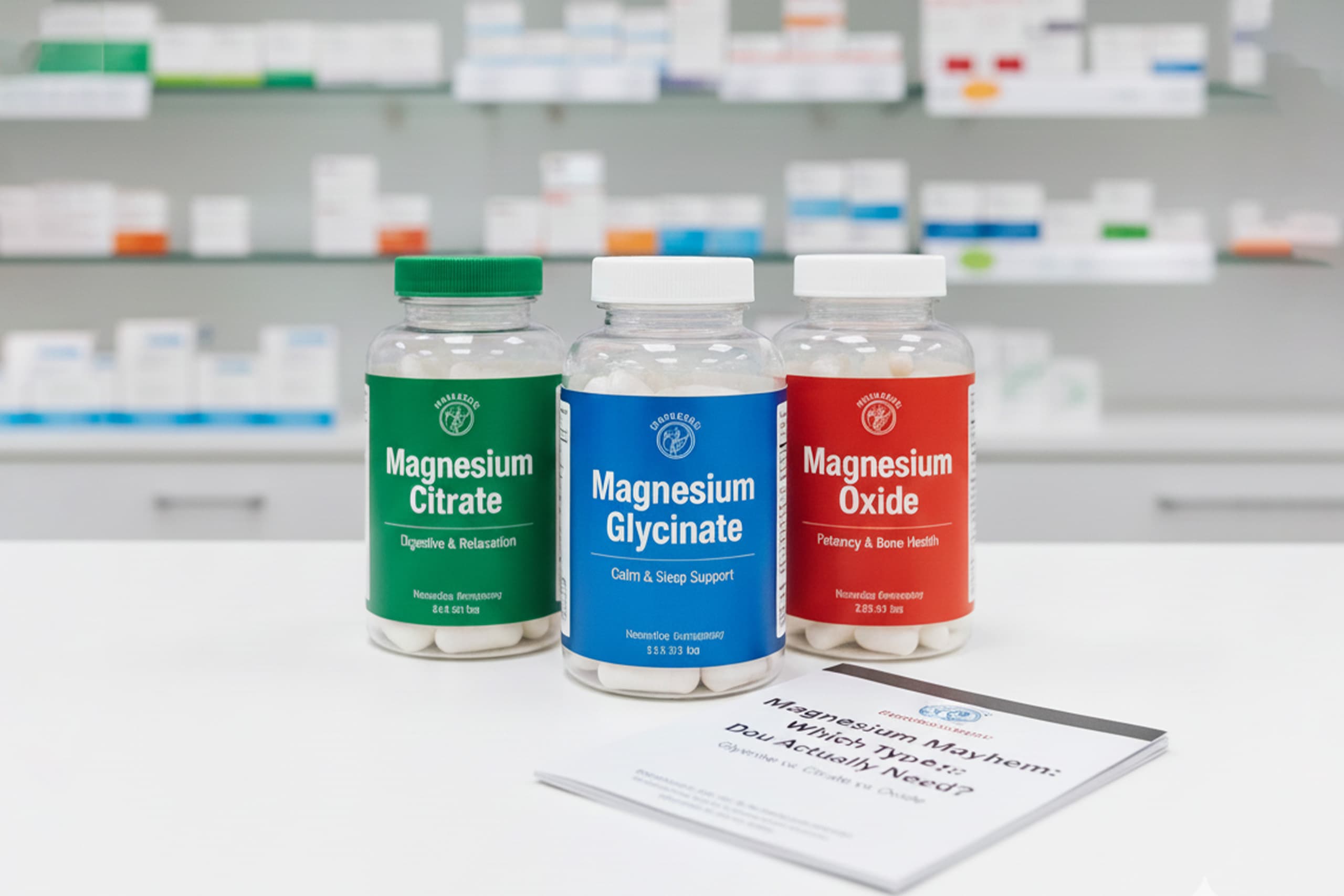
Magnesium Oxide vs Glycinate vs Citrate: Which Is Best?
January 4, 2026
Drowning in supplement options? Learn the real difference between magnesium glycinate (gentle), citrate (can loosen stools), and oxide (often poorly absorbed) so you pick the right bottle for sleep, stress, or digestion.
How to choose the right magnesium for your goal
You have heard magnesium can help with sleep, cramps, and stress. Then you reach the shelf and find oxide, citrate, glycinate, and malate, all promising to be the one you need.
Every bottle contains magnesium, but the second word on the label matters. It changes how well the supplement dissolves, how much your body absorbs, and how likely it is to upset your stomach. Here is how to match the form to what you actually want it to do.
310 to 420 mg
What most adults need each day from food, drinks, and supplements combined
350 mg
The daily upper limit for adults from supplements and medicines alone, unless a clinician advises more
Why people reach for it
Magnesium helps run more than 300 processes in your body, including muscle and nerve function, blood sugar control, and blood pressure. Many adults eat less than they need, and absorption drops with age. Some medicines, such as long-term acid reducers and certain water pills, can lower levels further. Low intake rarely causes obvious symptoms, so start by deciding what you want help with.
Label tip: look for elemental magnesium
The Supplement Facts panel lists the magnesium your body actually gets, such as "Magnesium 120 mg." The bigger number next to "magnesium glycinate 1,000 mg" is the weight of the whole compound, not the dose. Always compare products by the elemental amount.
The four common forms at a glance
| Form | Absorption | Stomach | Best for |
|---|---|---|---|
| Oxide | Low | Often loosens stools | Occasional constipation, heartburn |
| Citrate | Good | Can loosen stools at higher doses | Daily support if you tend toward constipation |
| Glycinate | Good | Usually gentle | Sensitive stomachs, evening use |
| Malate | Good | Usually gentle | Daytime use |
Oxide: the budget laxative
It dissolves poorly, so much of it stays in your gut and pulls in water. That helps with constipation but often brings cramping and urgency. It is rarely the best start for sleep or daily support.
Citrate: the middle ground
Better absorbed than oxide, with a mild laxative effect some people welcome. Start low, take it with food, and increase slowly.
Glycinate: the gentle one
Bound to the amino acid glycine and less likely to act as a laxative. Research on magnesium for sleep is mixed, but glycinate is a reasonable form to try because most stomachs handle it well.
Malate: the daytime pick
Bound to malic acid. Claims about energy or fibromyalgia rest on limited studies, so treat it as a trial rather than a guaranteed fix.
Medicines that need spacing
Magnesium can bind to some medicines in your gut and stop them from working fully.
| If you take | Timing |
|---|---|
| Bone medicines like alendronate | Keep magnesium at least 2 hours apart |
| Antibiotics like doxycycline, ciprofloxacin, or levofloxacin | Take the antibiotic 2 hours before or 4 to 6 hours after magnesium |
| Thyroid medicine, water pills, or long-term acid reducers | Ask your pharmacist about timing and whether your levels need checking |
Talk to your clinician first if you have kidney disease
Healthy kidneys clear extra magnesium. When they can't, it can build up and cause low blood pressure, weakness, or an irregular heartbeat. This also applies if you use antacids or laxatives often, since many already contain magnesium.
How to start
For many adults, a cautious trial is 100 to 200 mg of elemental magnesium a day with food. Give it two weeks, then adjust based on how you feel and how your stomach responds. Diarrhea is the most common sign you are taking more than your body wants. Add up every source, including multivitamins and sleep blends, and stay under 350 mg from supplements unless your clinician says otherwise.
Food counts too. Pumpkin seeds, almonds, cashews, spinach, black beans, and whole grains are all rich sources, and food magnesium carries no risk of overdose for healthy kidneys.
Your quick cheat sheet
Prone to constipation
Start with citrate
Sensitive stomach or trying it for sleep
Start with glycinate
Want a daytime option
Try malate
Need occasional, cheap relief
Oxide works, with side effects
Bring to the pharmacy counter
- Any vitamins, sleep aids, or antacids you take now.
- A list of your prescriptions, including any filled elsewhere.
- Your goal: sleep, cramps, constipation, or stress.
Still not sure which one fits?
Tell your pharmacist what you hope magnesium will do. They can check it against your medicines, add up what you already take, and help you pick a form and dose that suit you.